PROJECT FOR THE URBAN TRANSFORMATION OF THE SURROUNDINGS OF THE TARRAGONA PORT AUTHORITY (APT) HEADQUARTERS
Drafting Team: Lorena Maristany, Sílvia Mas, Jaume Gil Bou, Alan Latre, and Santi Alberca, architects.
Collaborators: Daniel Gómez de Zamora, Anna Pujol, and Albert Vich, landscape and biology; Isa Vega, architect and Miquel Portell and Josep Brunés, engineers. Year: 2024 Promoter: Tarragona Port Authority
THE PORT PARK
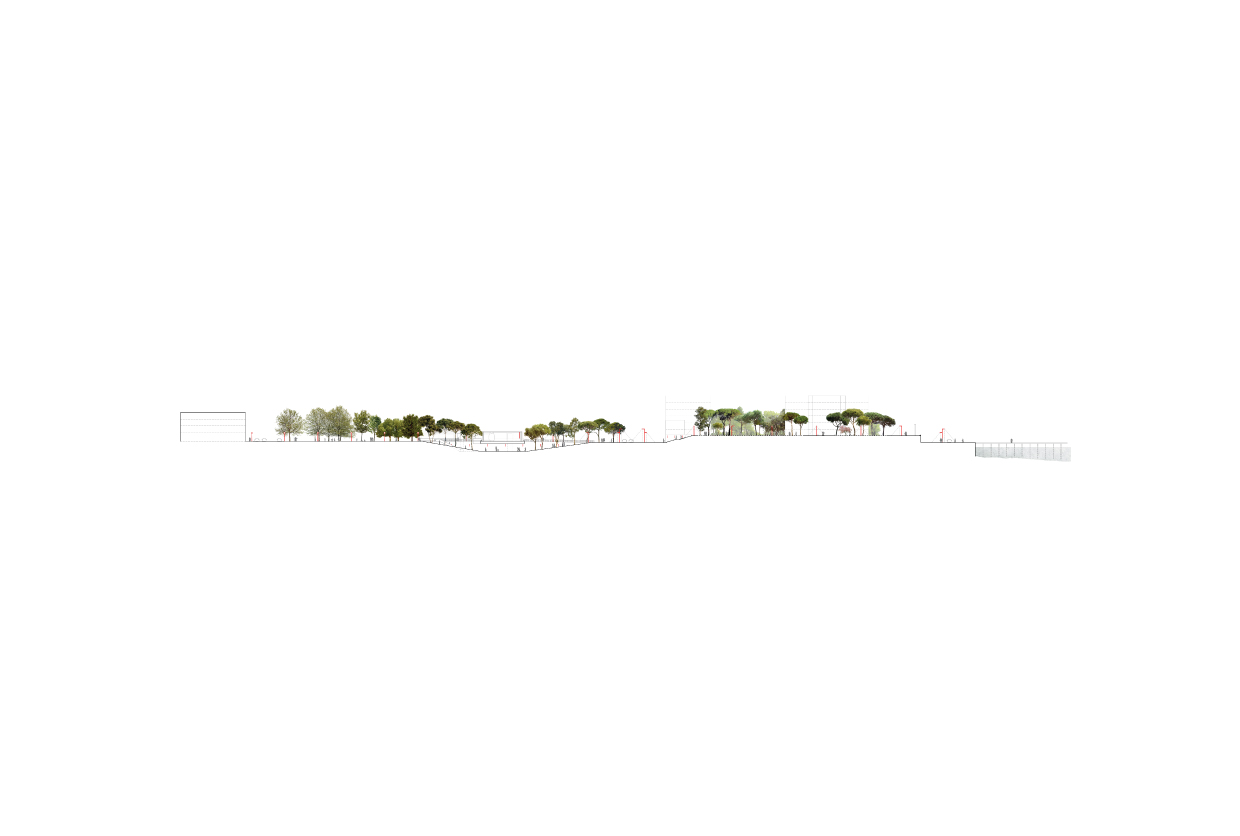
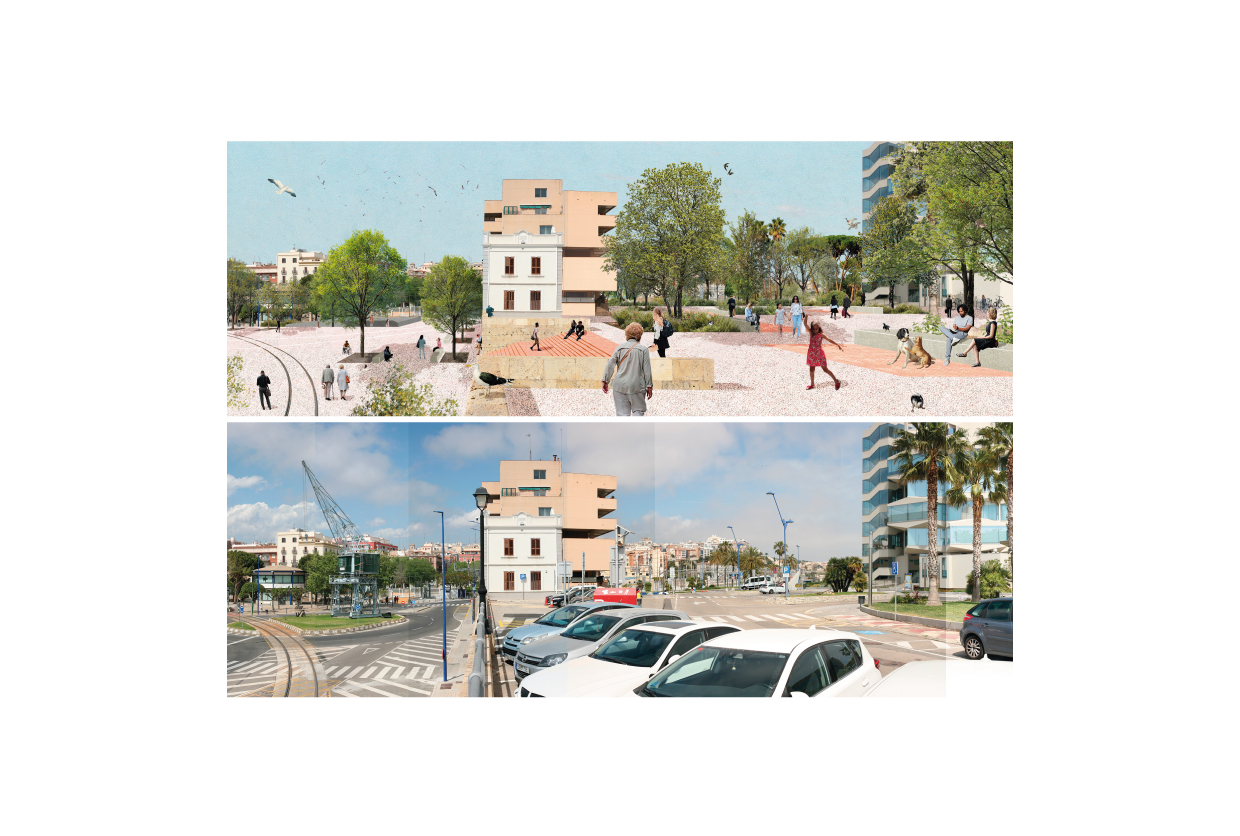
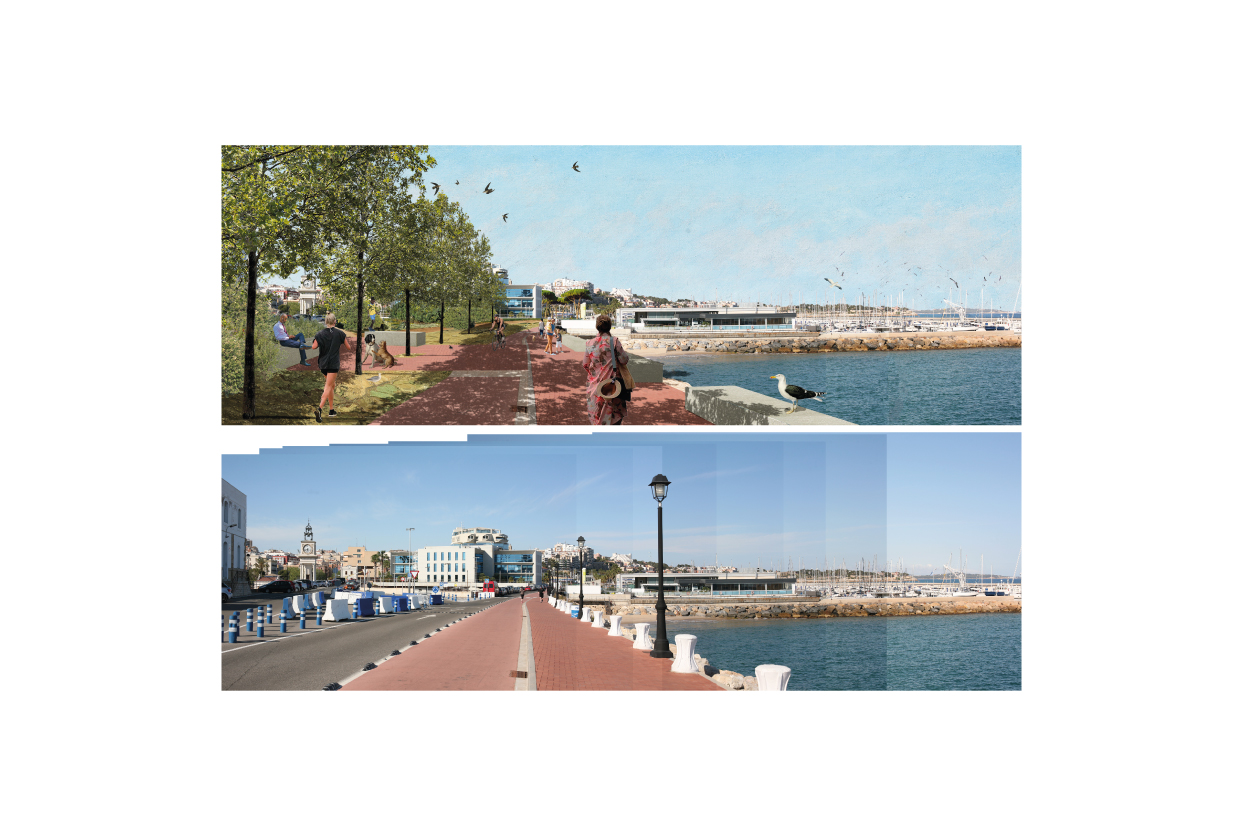
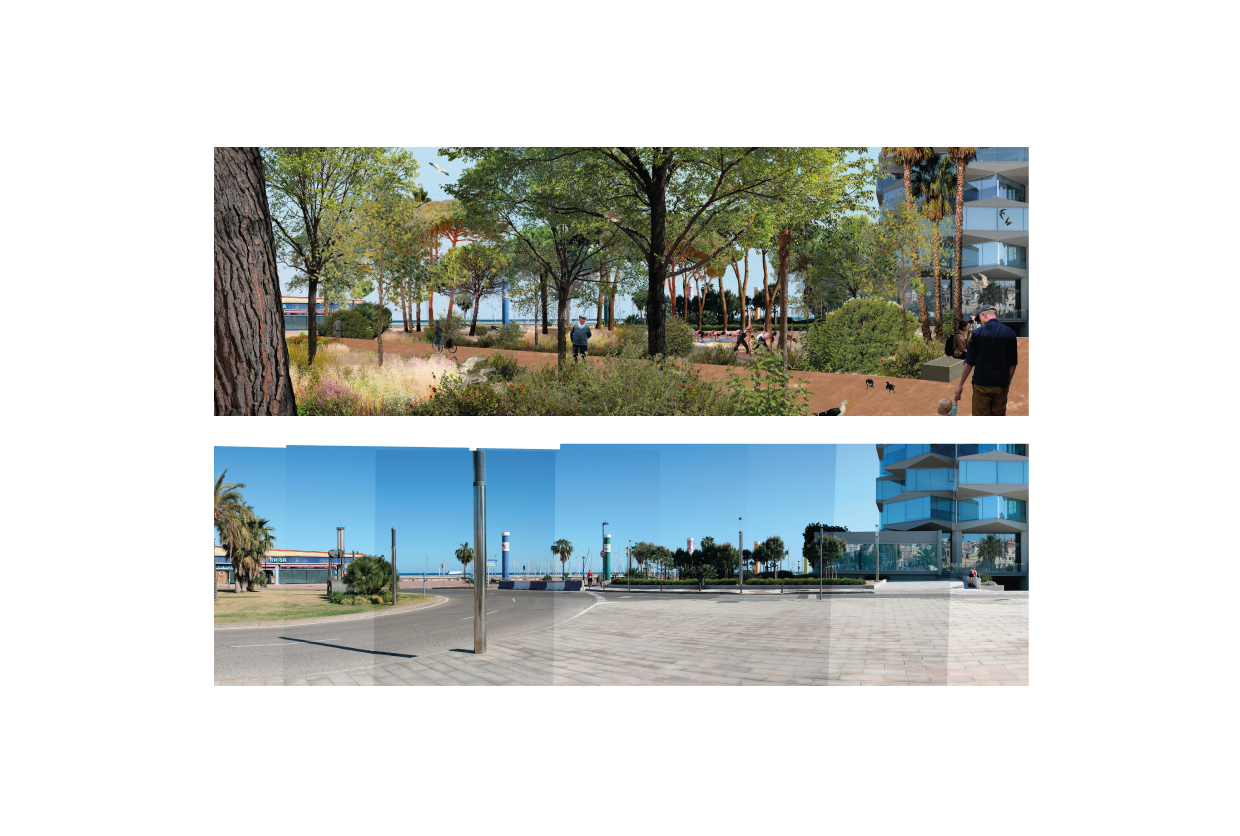
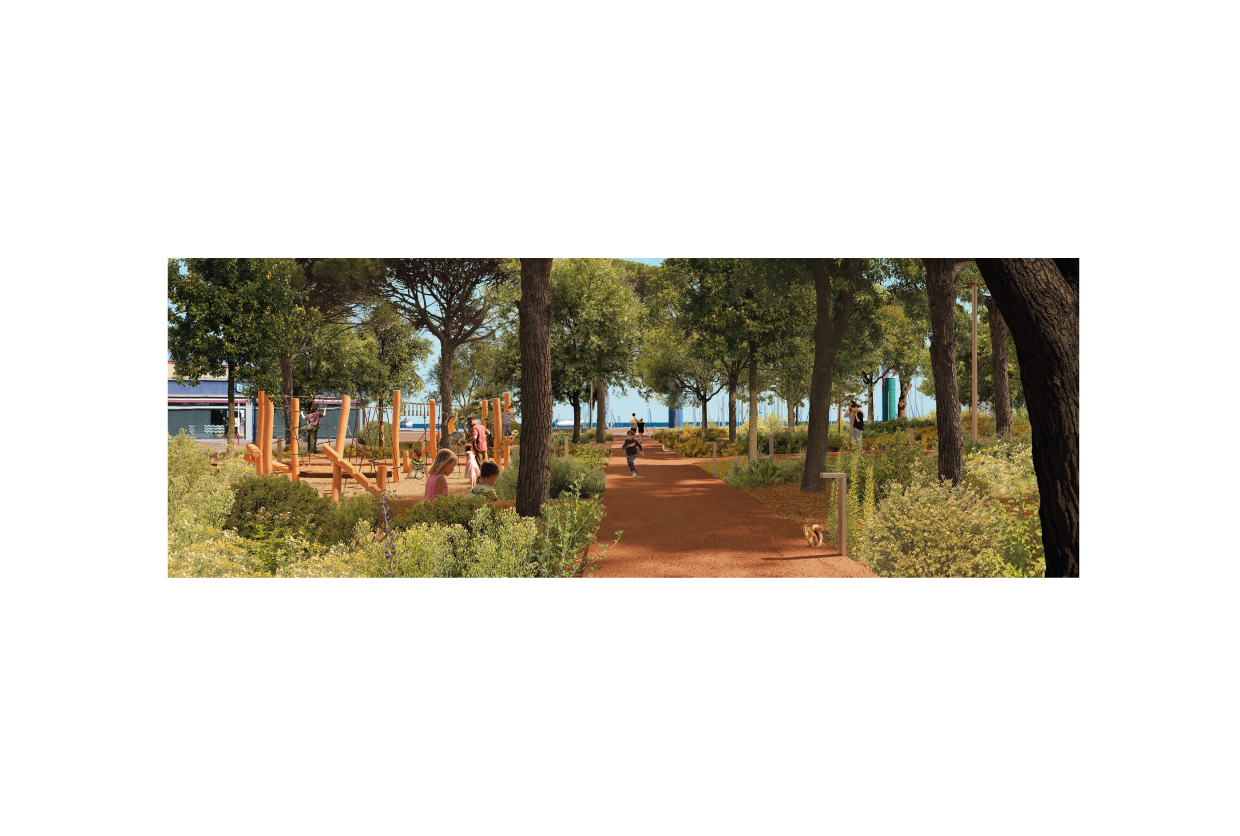
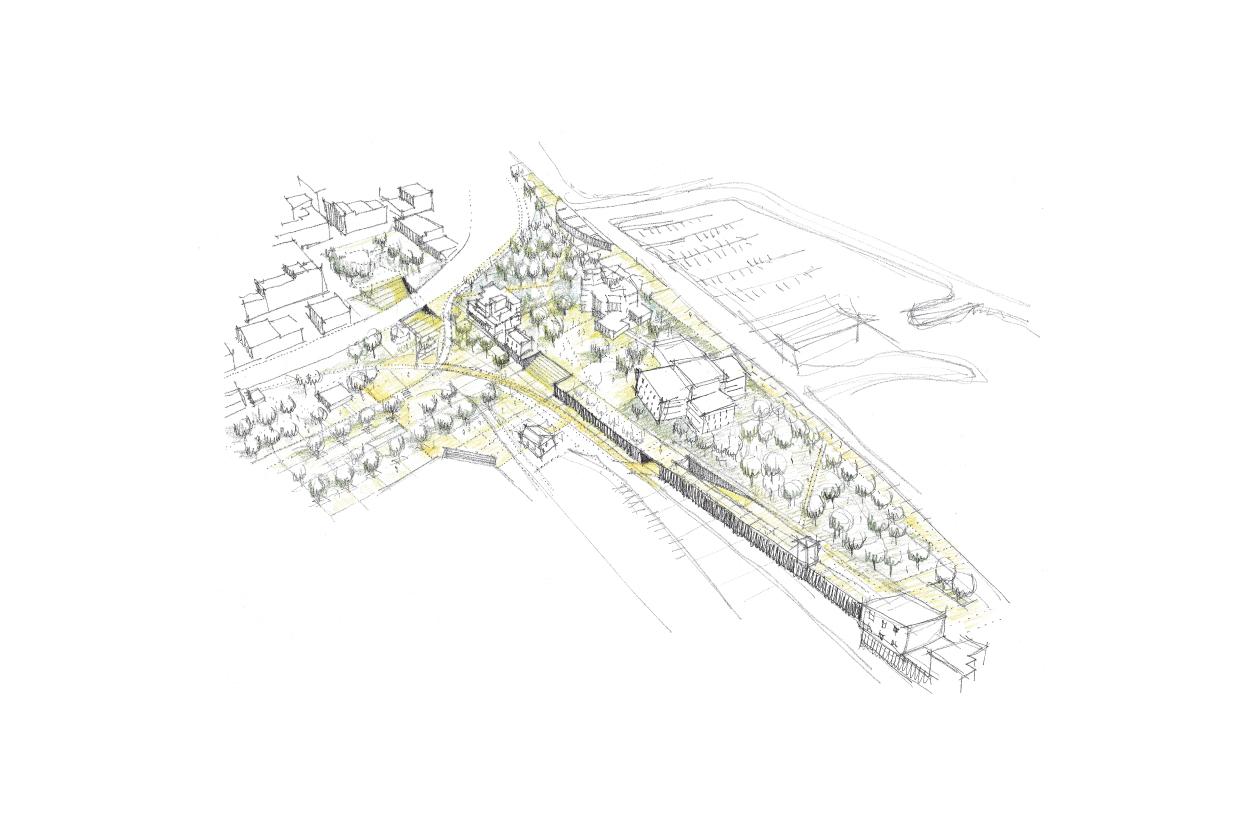
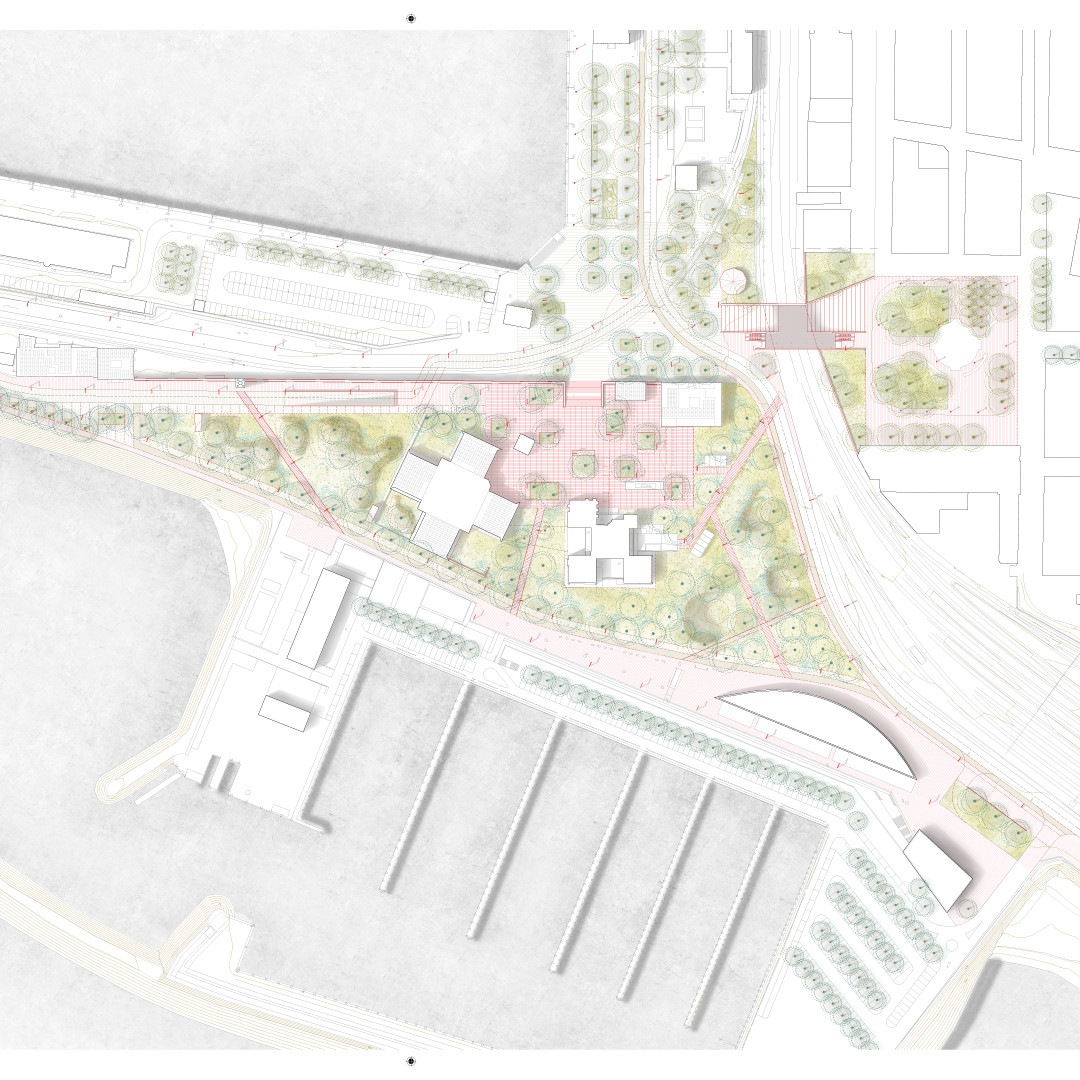
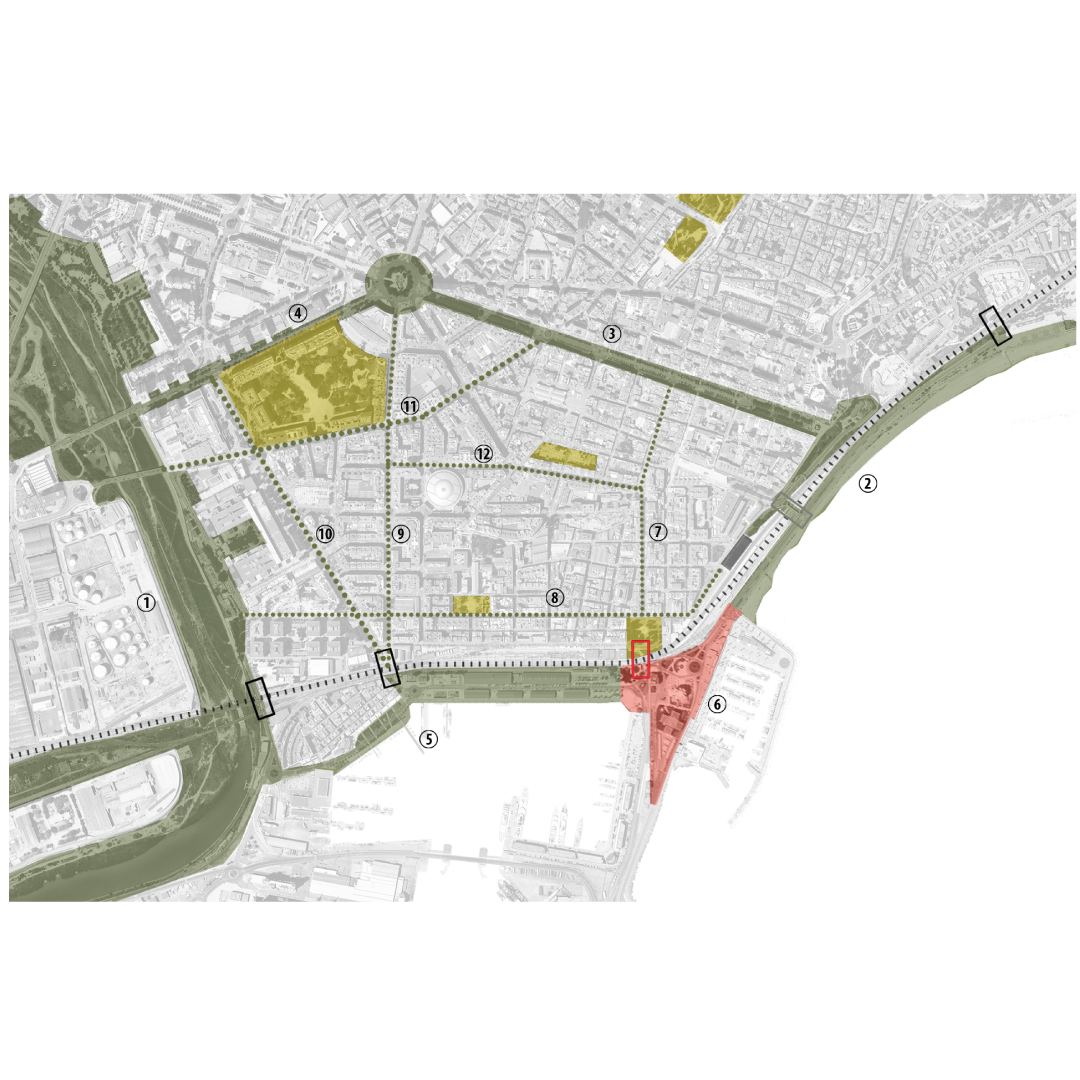
The main objectives are the opening of the port to the city and the transformation of this space, currently with heavy vehicular traffic, into a greener area acting as a large city-scale park that functions as a climate refuge in a climate emergency scenario.
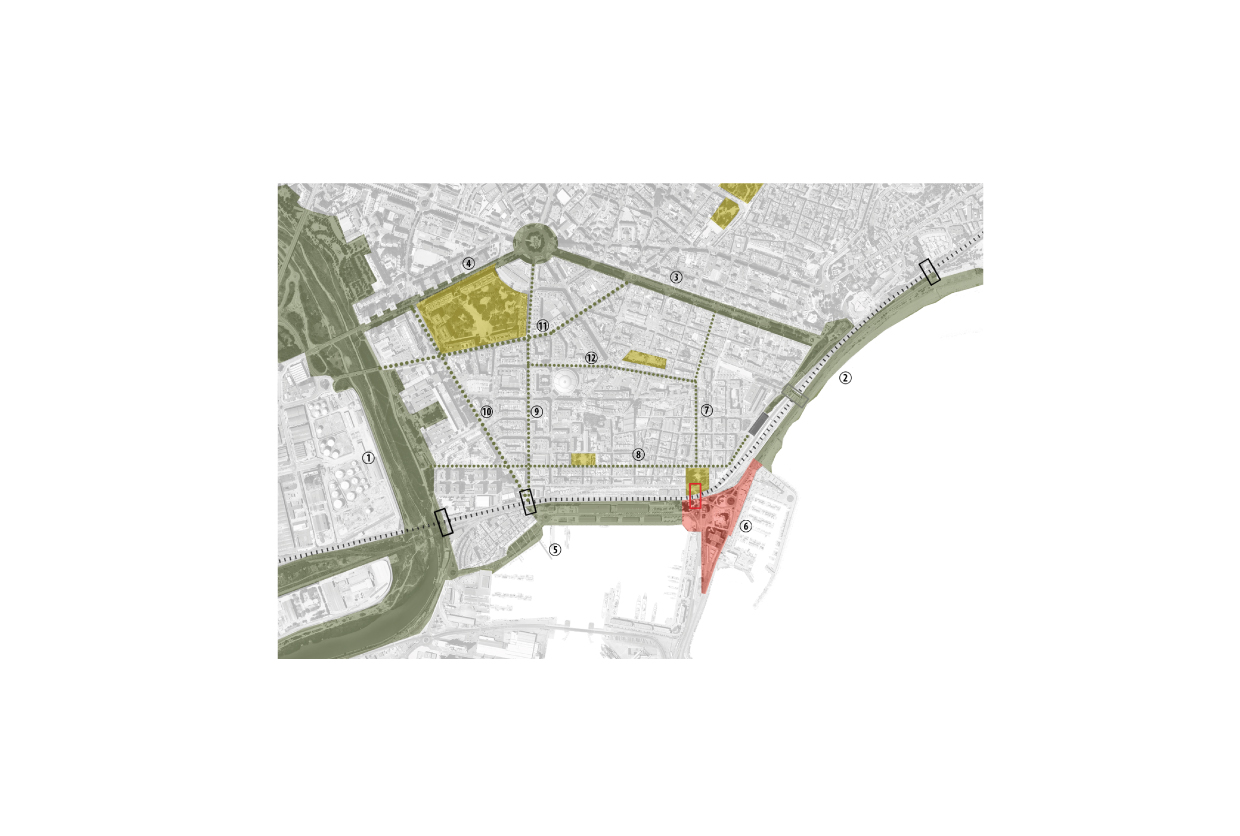
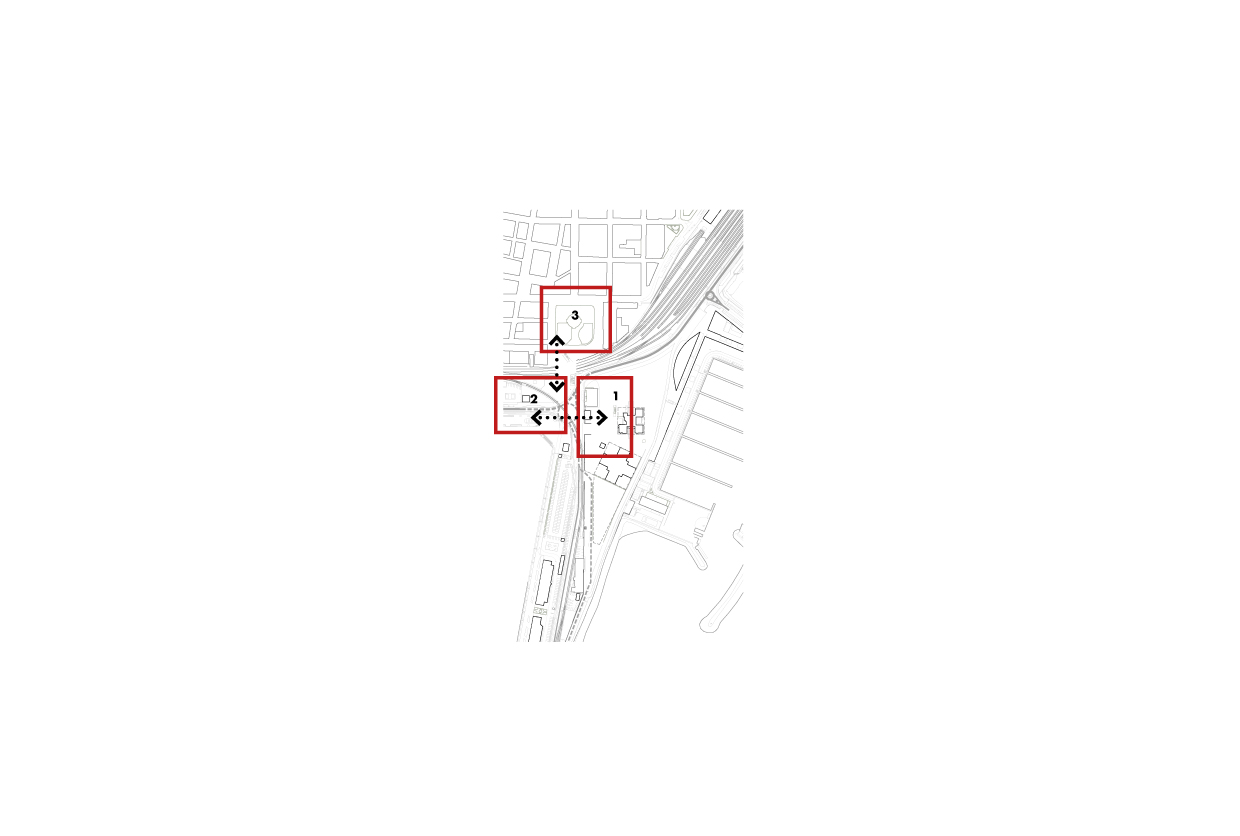
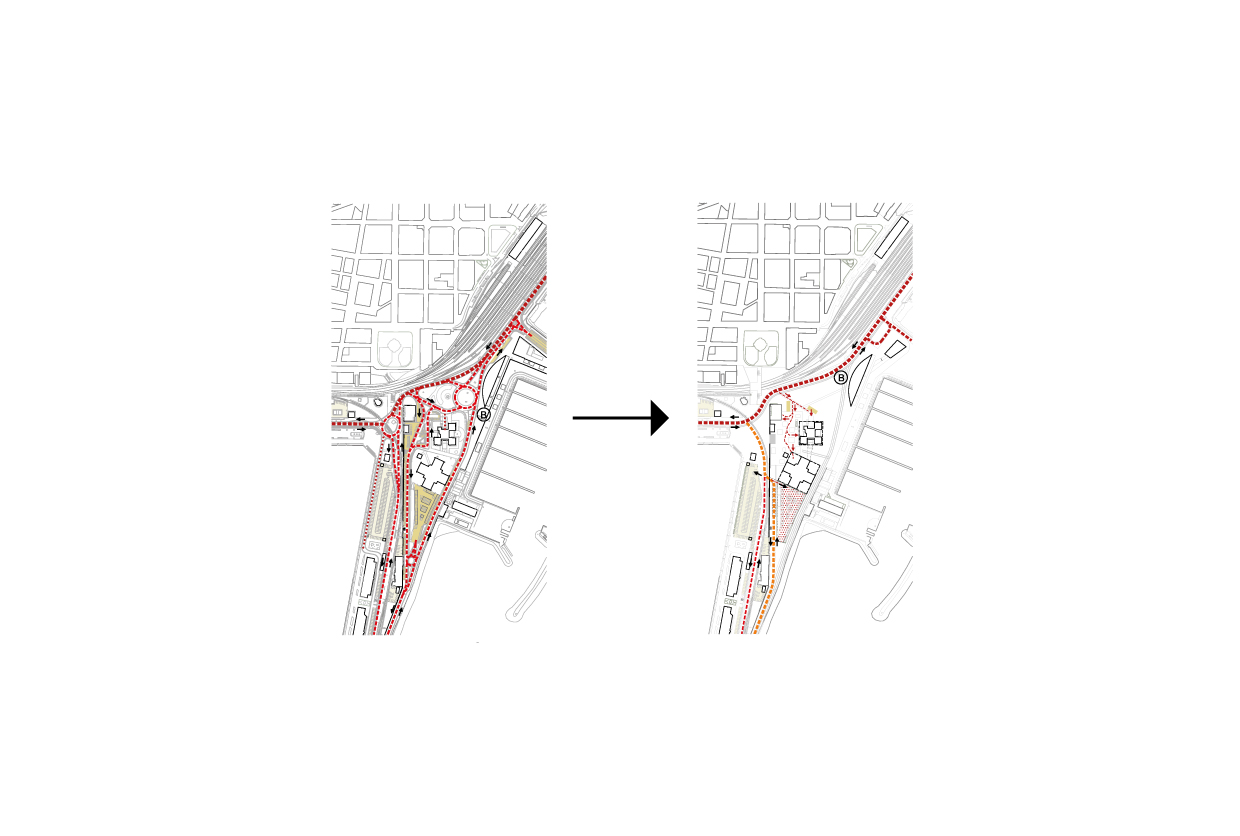
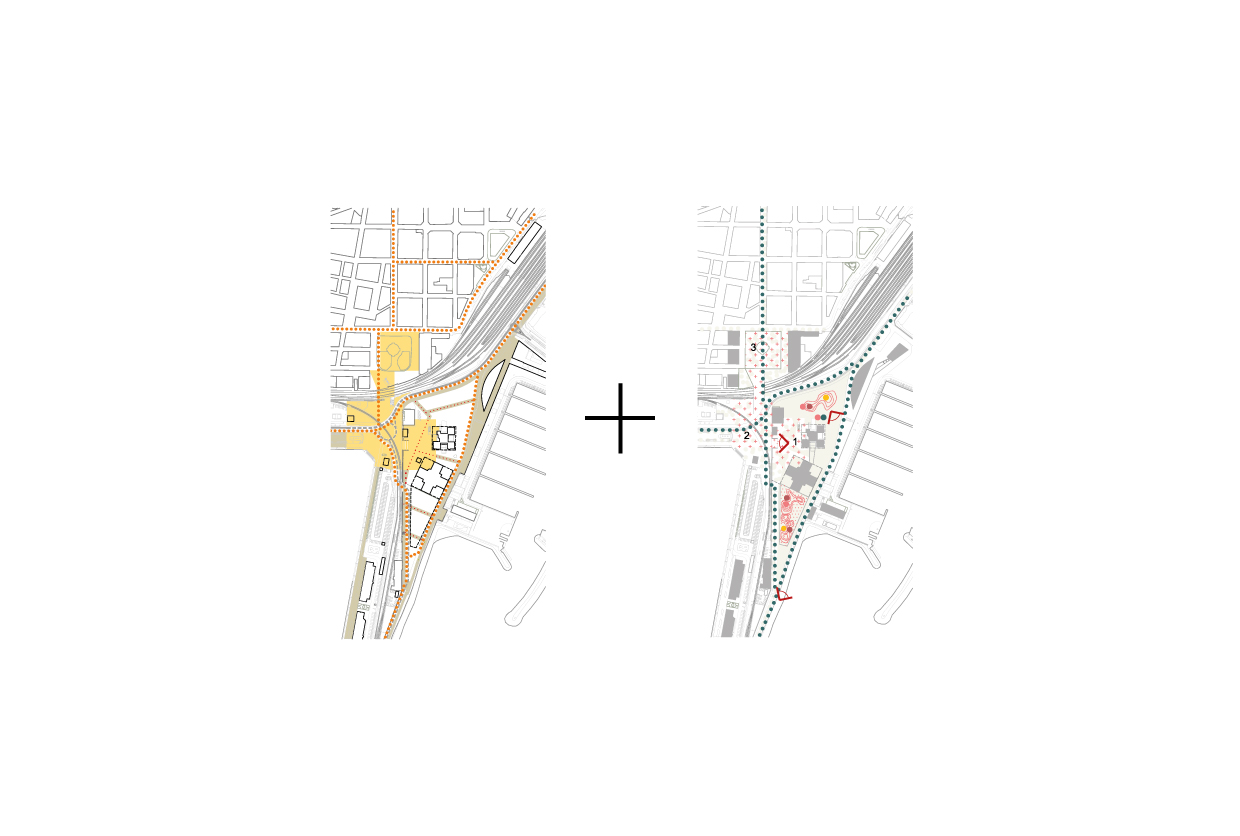
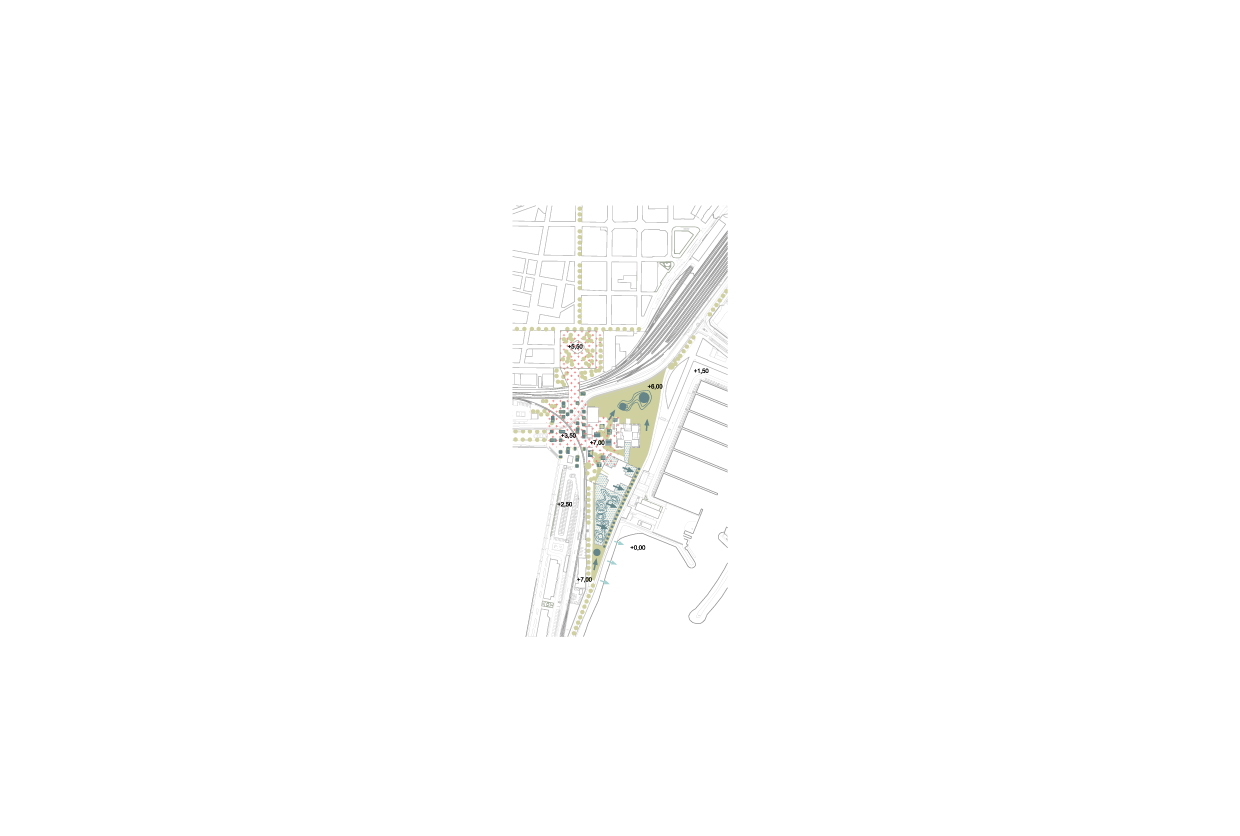
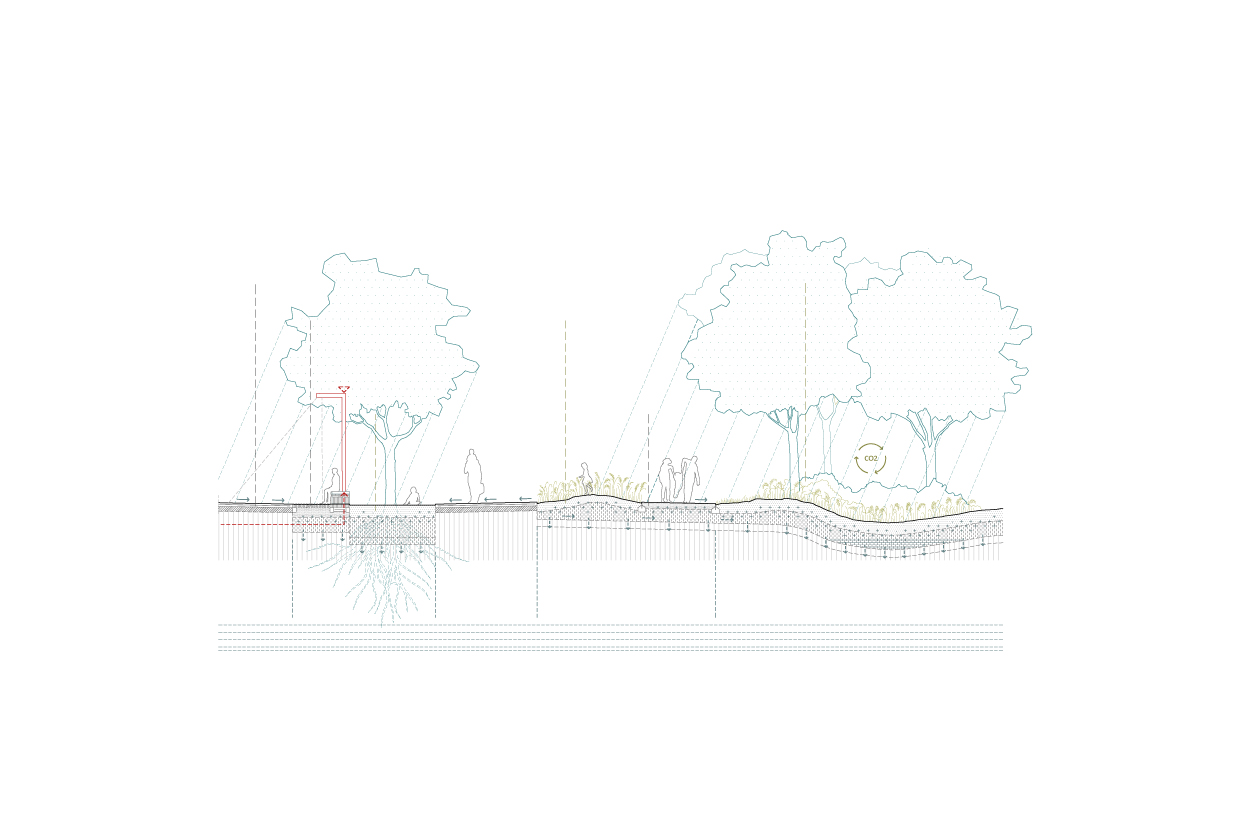
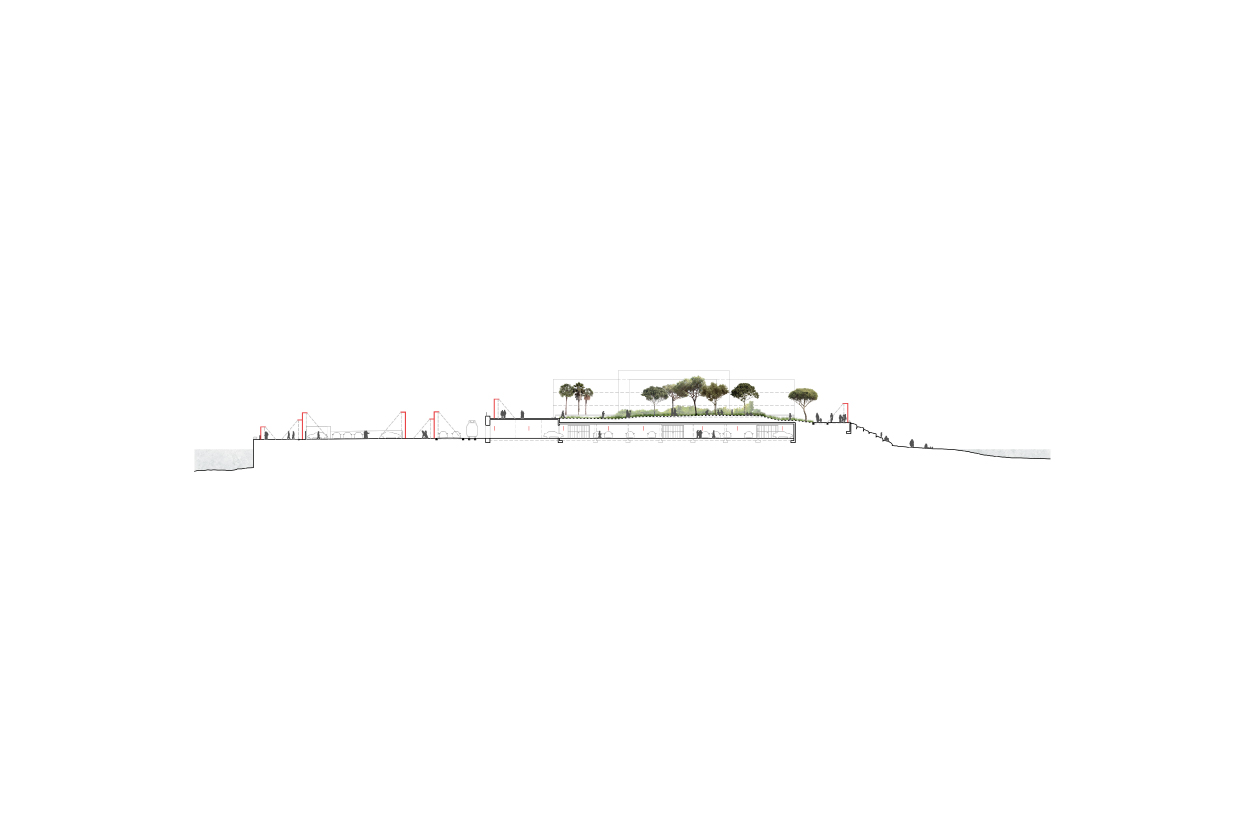
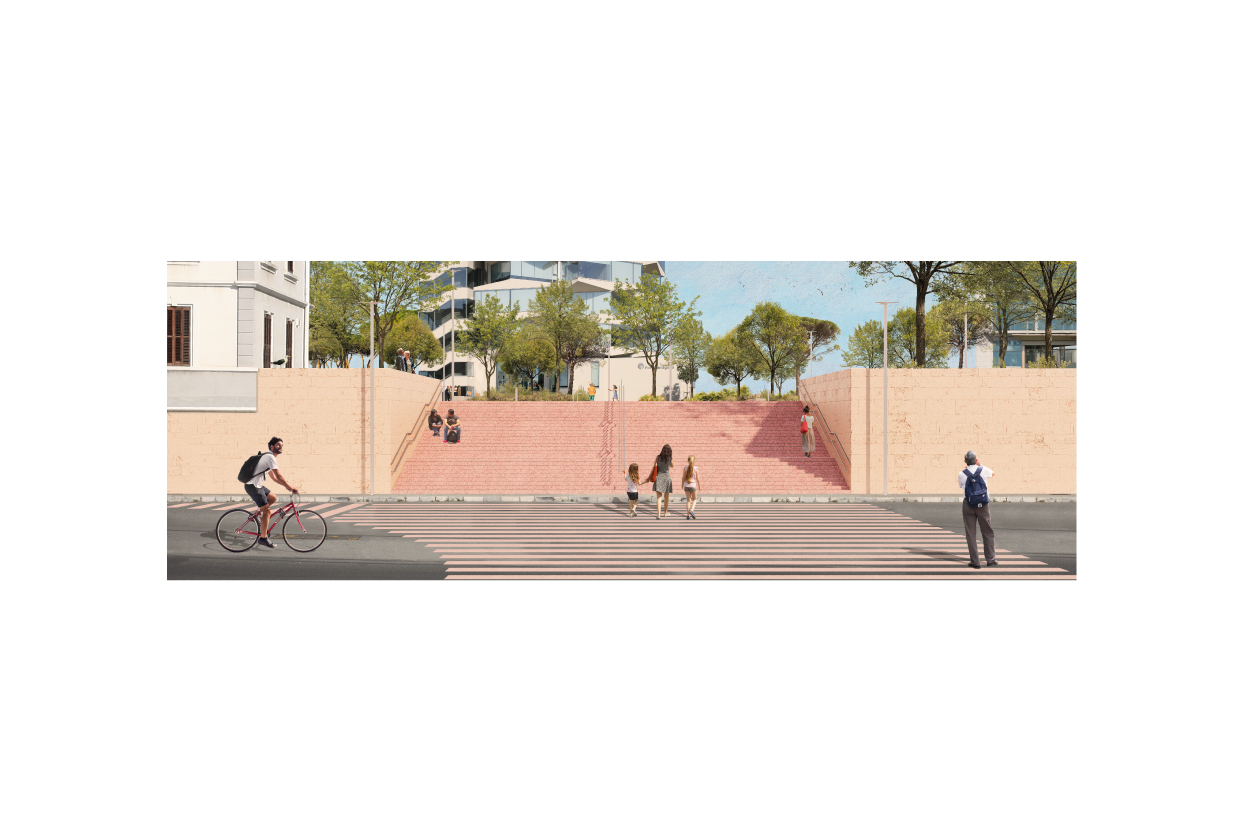
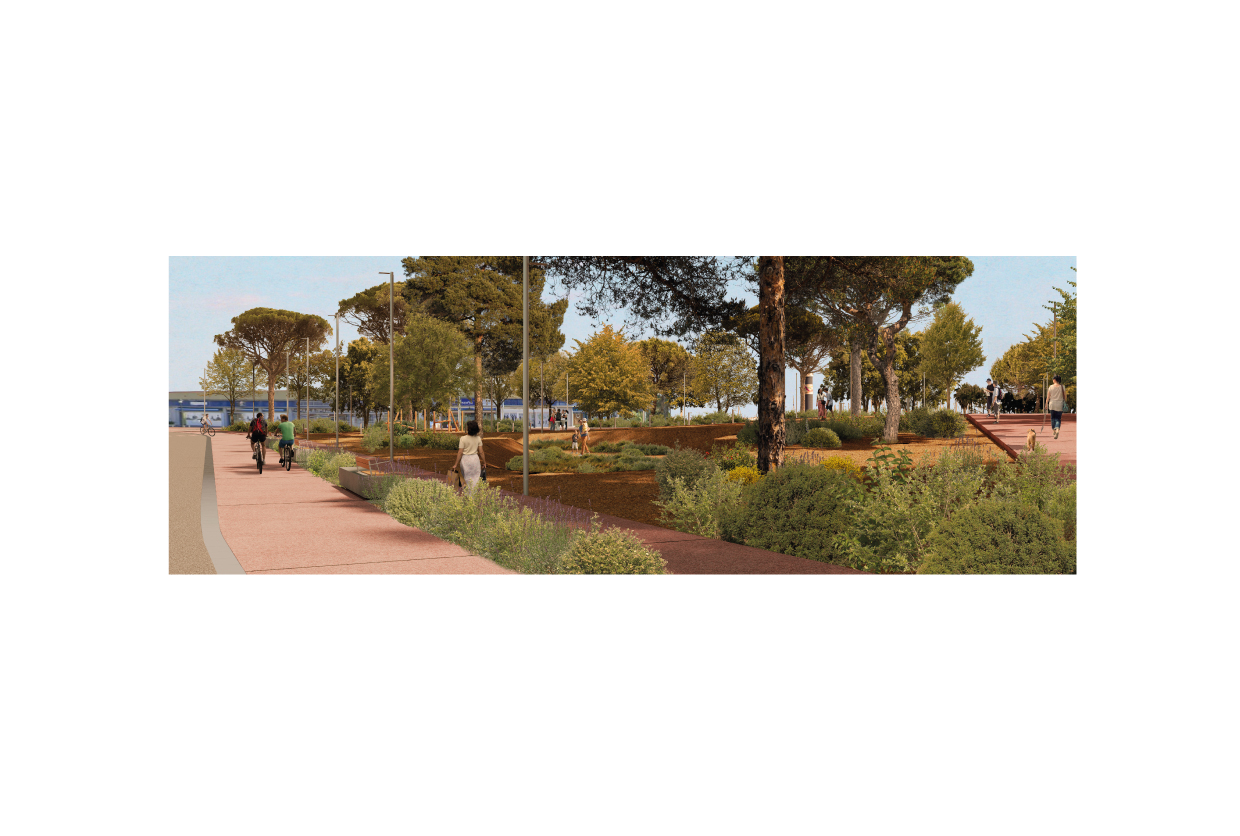
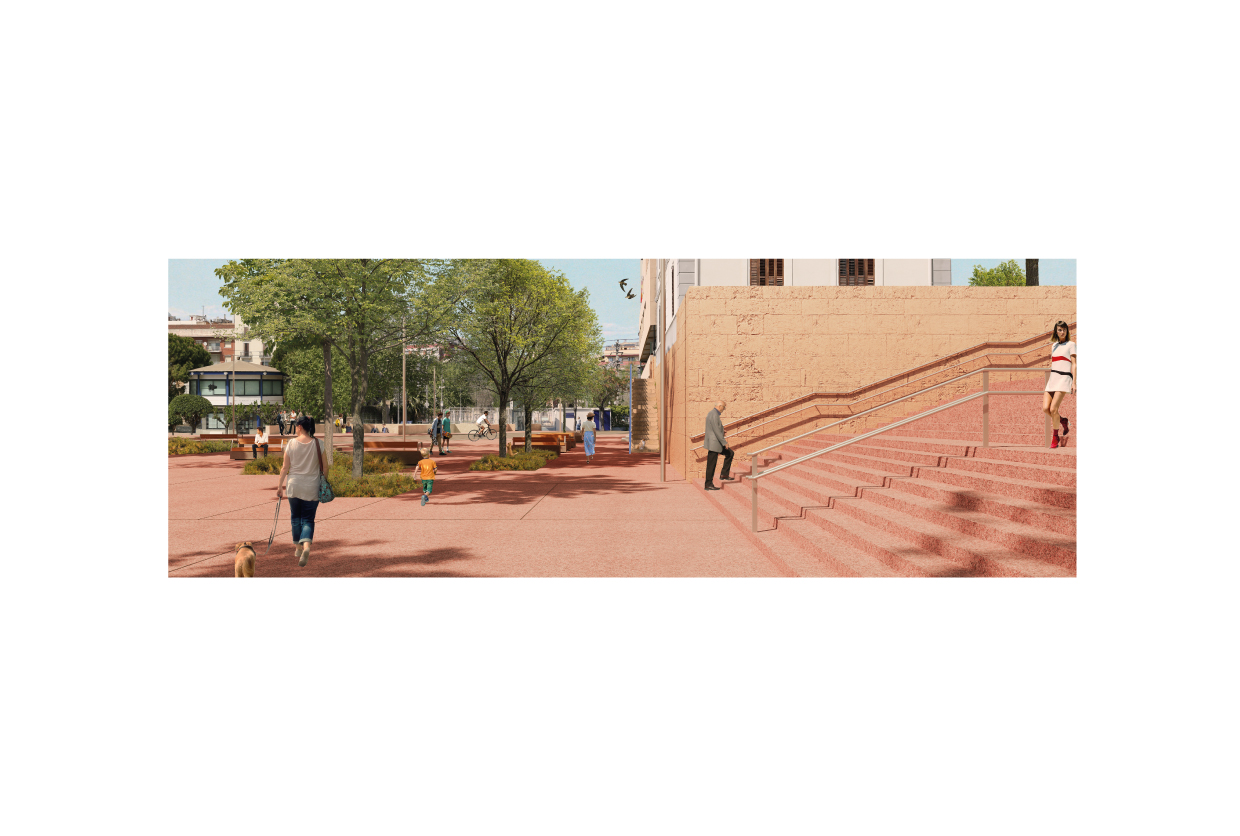
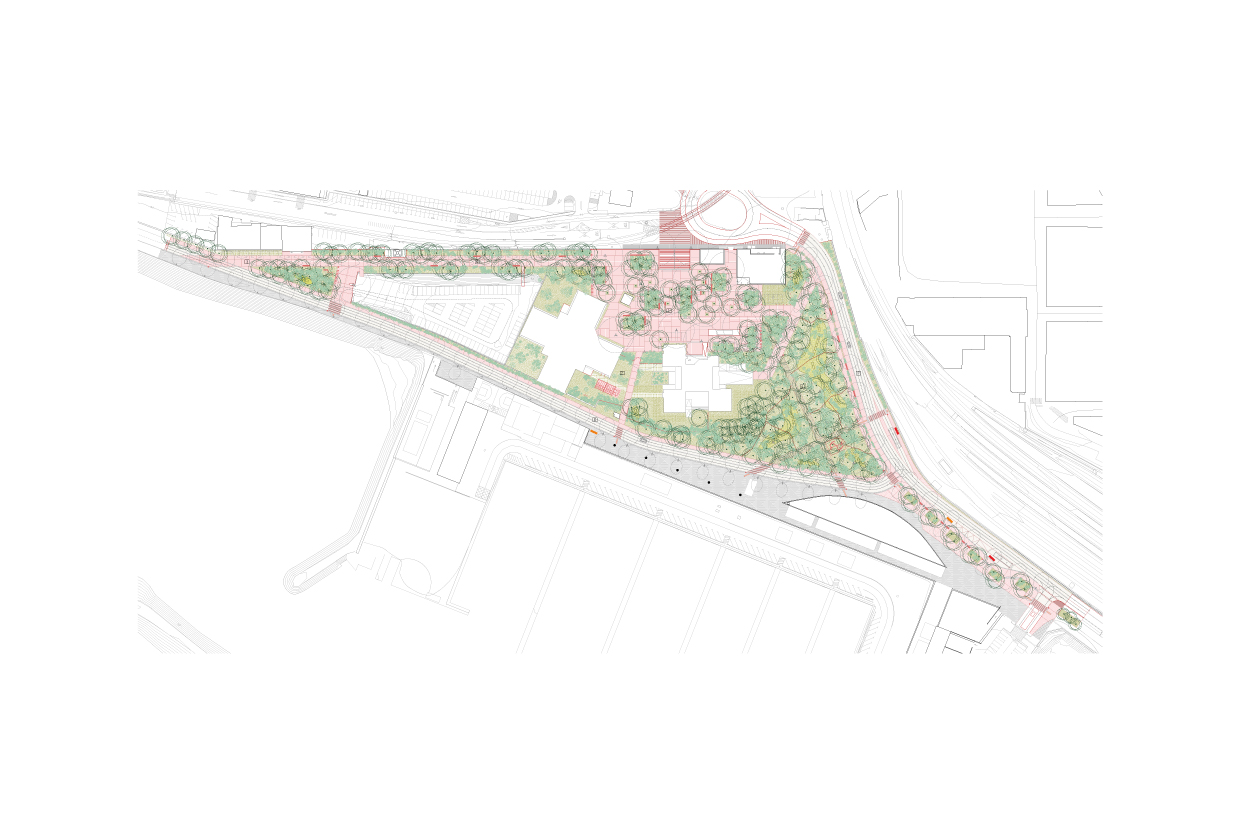
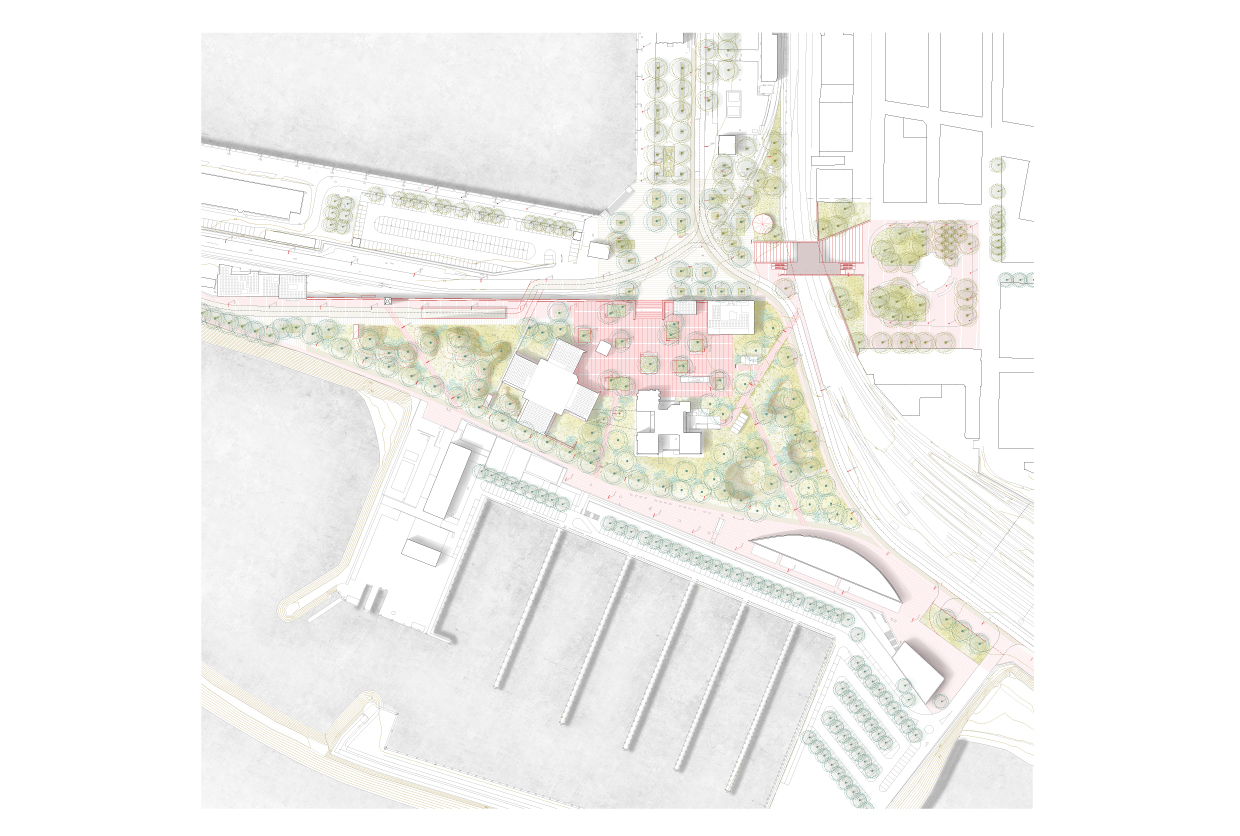
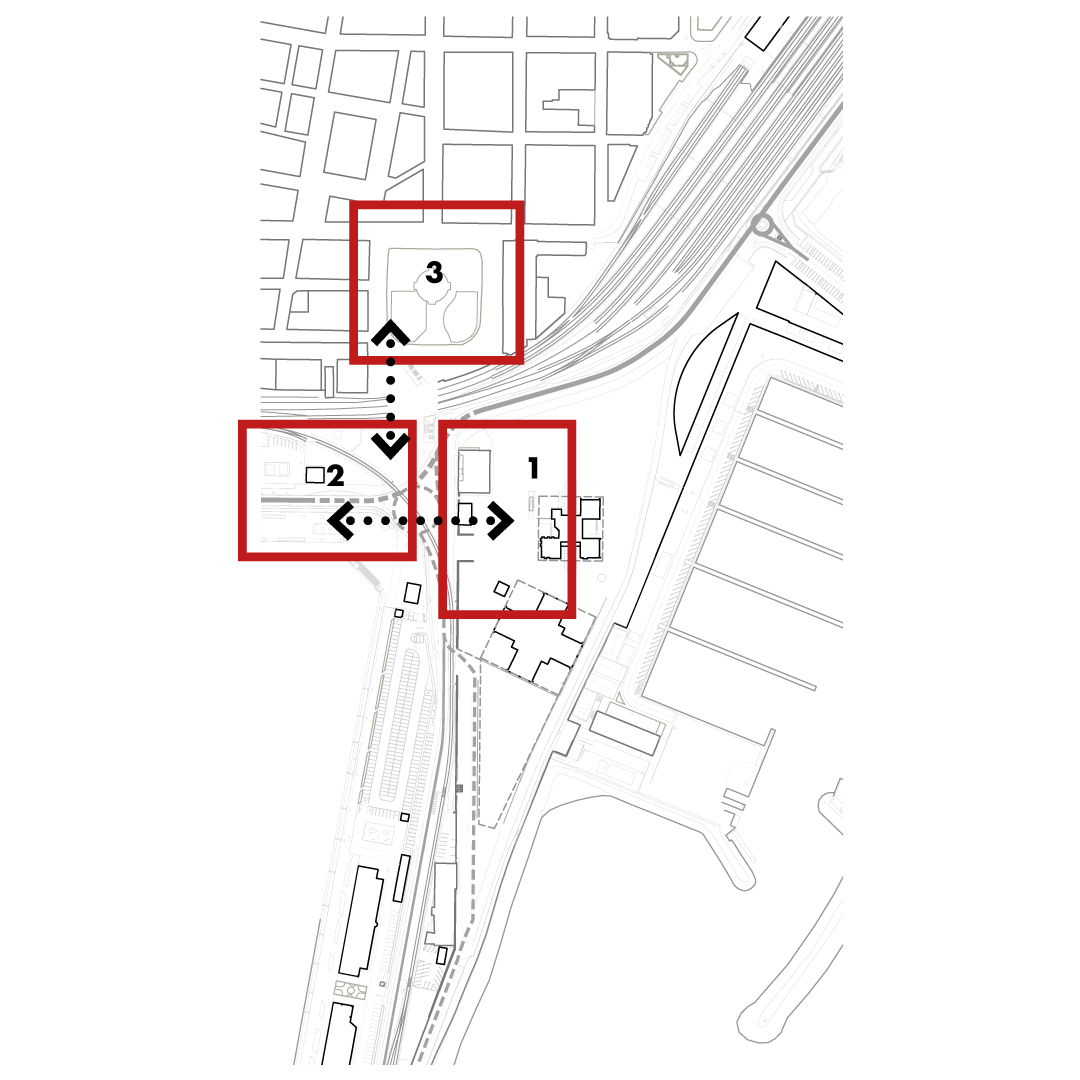
The strategies are: identifying the area as an URBAN HINGE within Tarragona’s open space system; restructuring the space through a SYSTEM OF THREE SQUARES (APT Square, Royal Square, and Carros Square); opening a LARGE STAIRCASE in the wall of the Paseo del Reloj, which becomes the BACKBONE of the project; simplifying the vehicular traffic system and promoting ACTIVE MOBILITY; SOCIAL REACTIVATION through the creation of spaces for people; re-naturalizing the space to create a DIVERSE and heterogeneous LANDSCAPE that functions as a climate refuge, and implementing a Sustainable Drainage System for more efficient WATER MANAGEMENT.
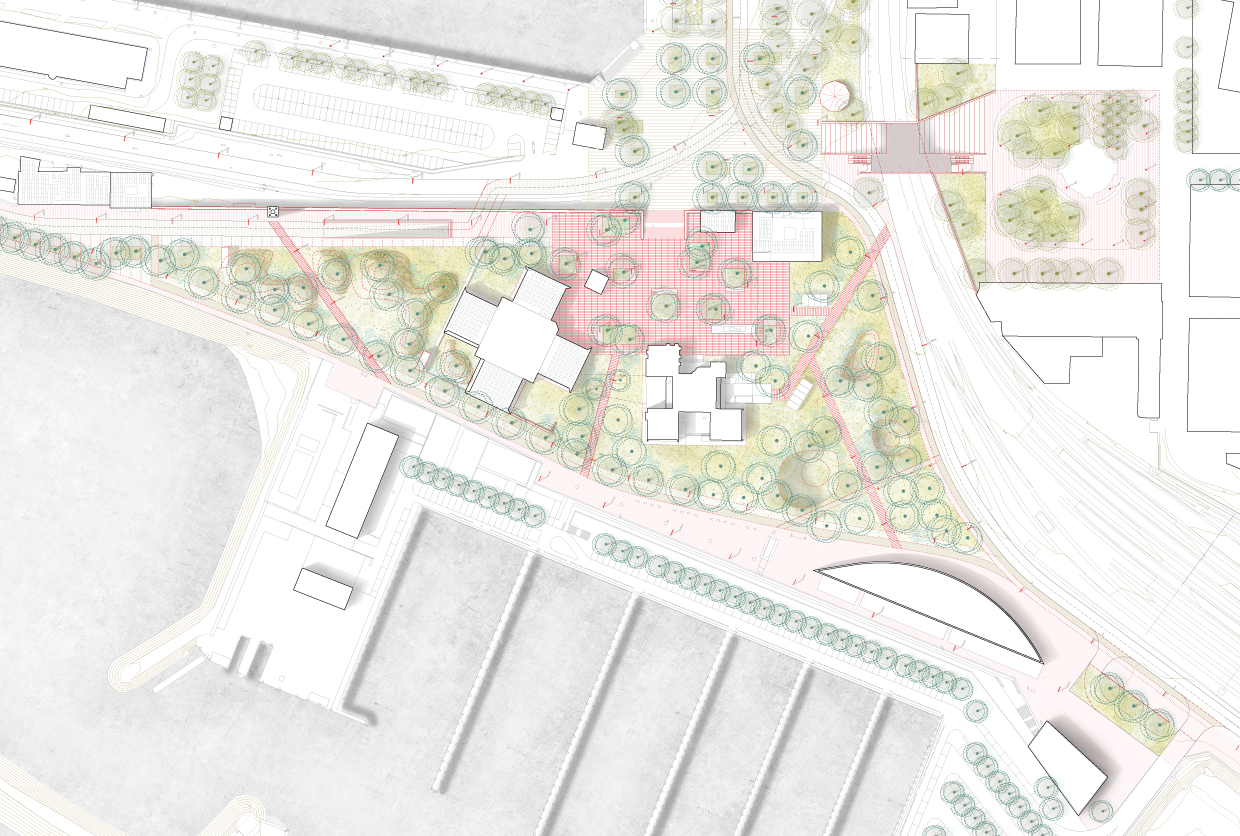
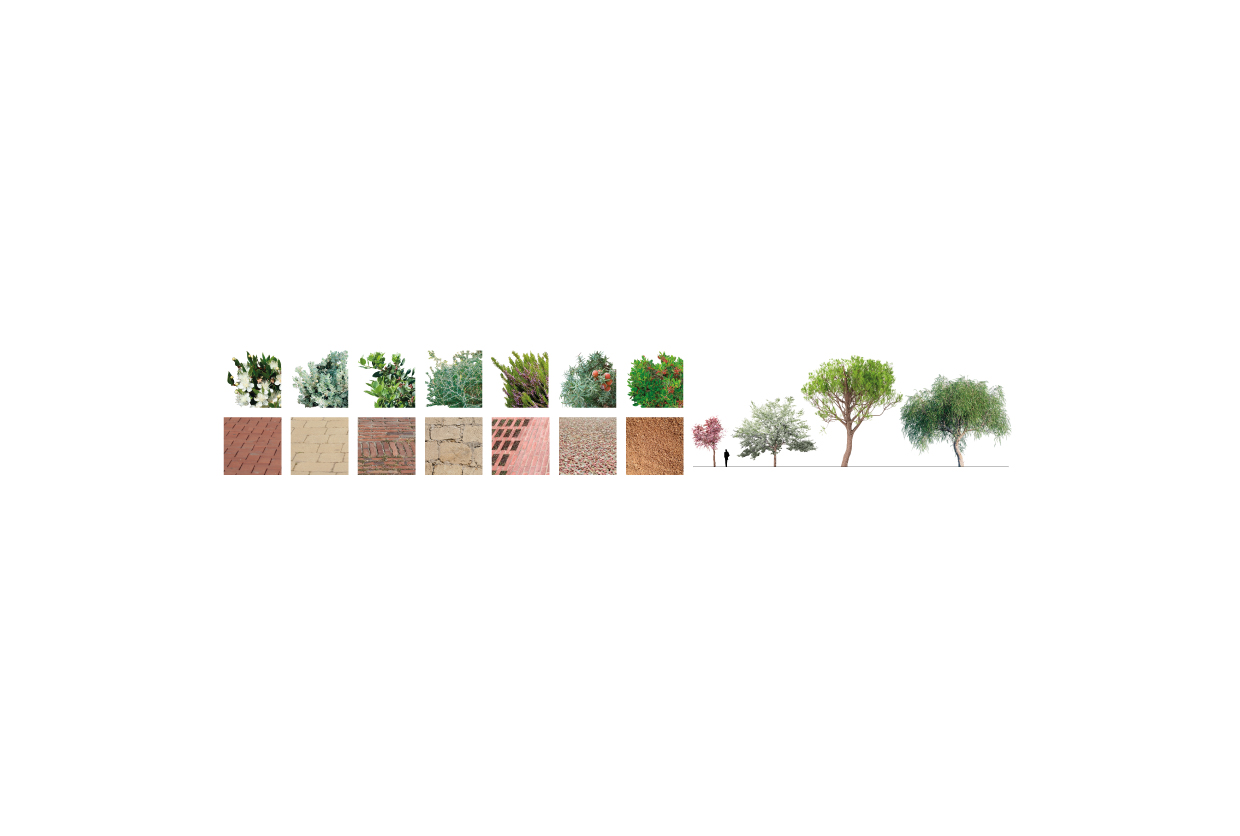
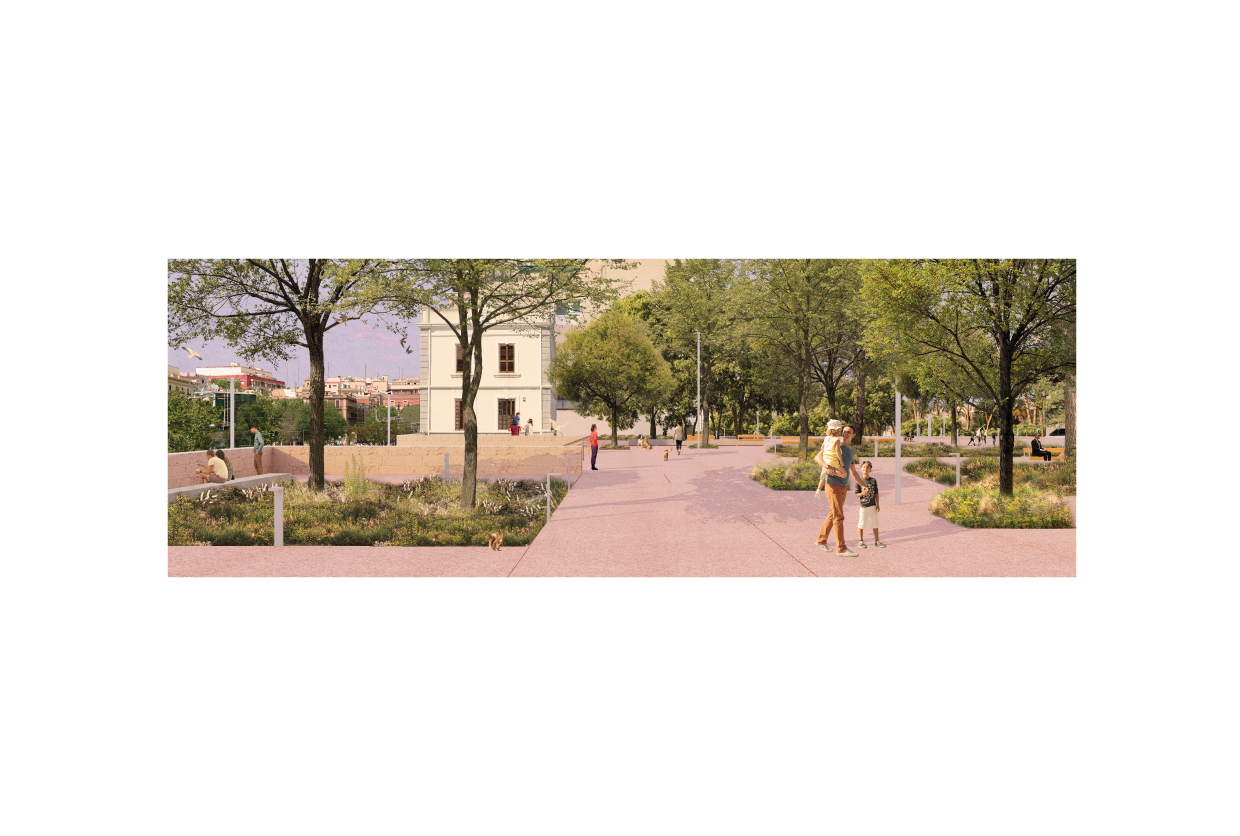
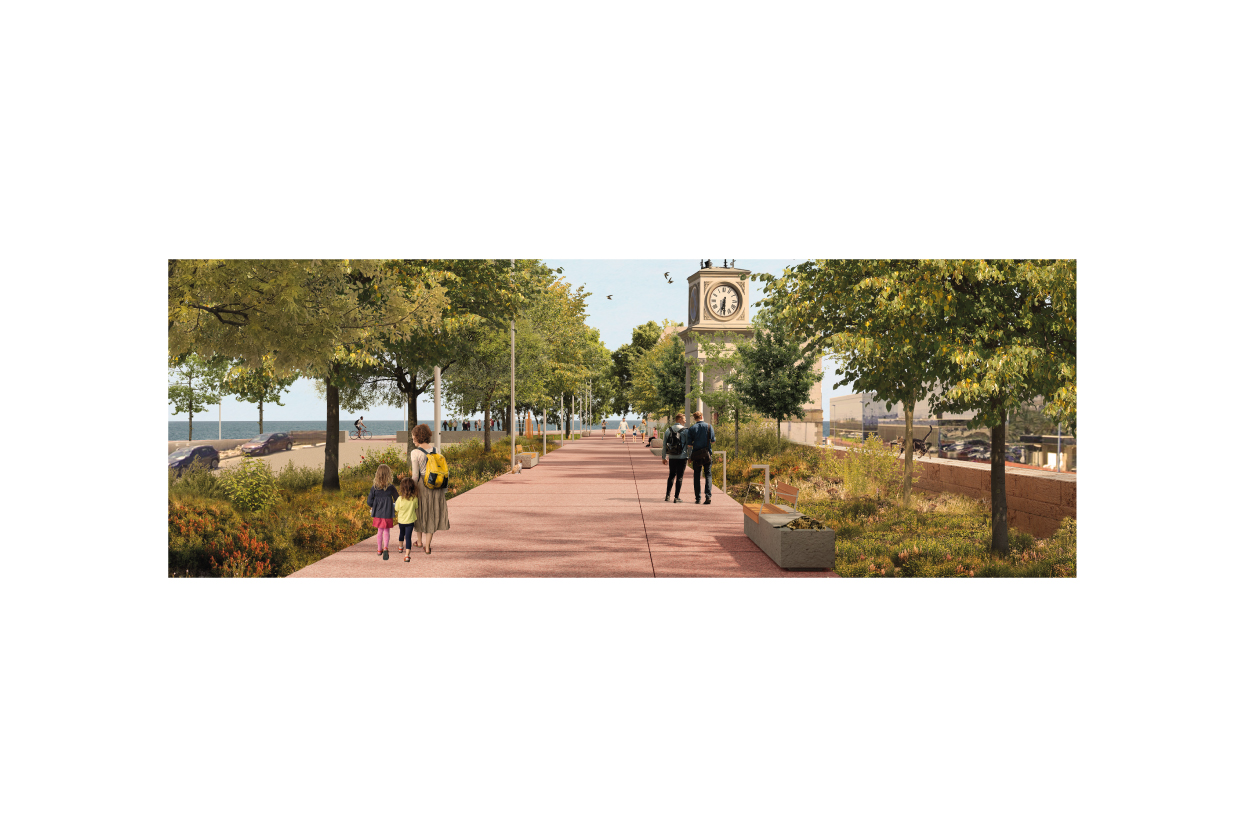
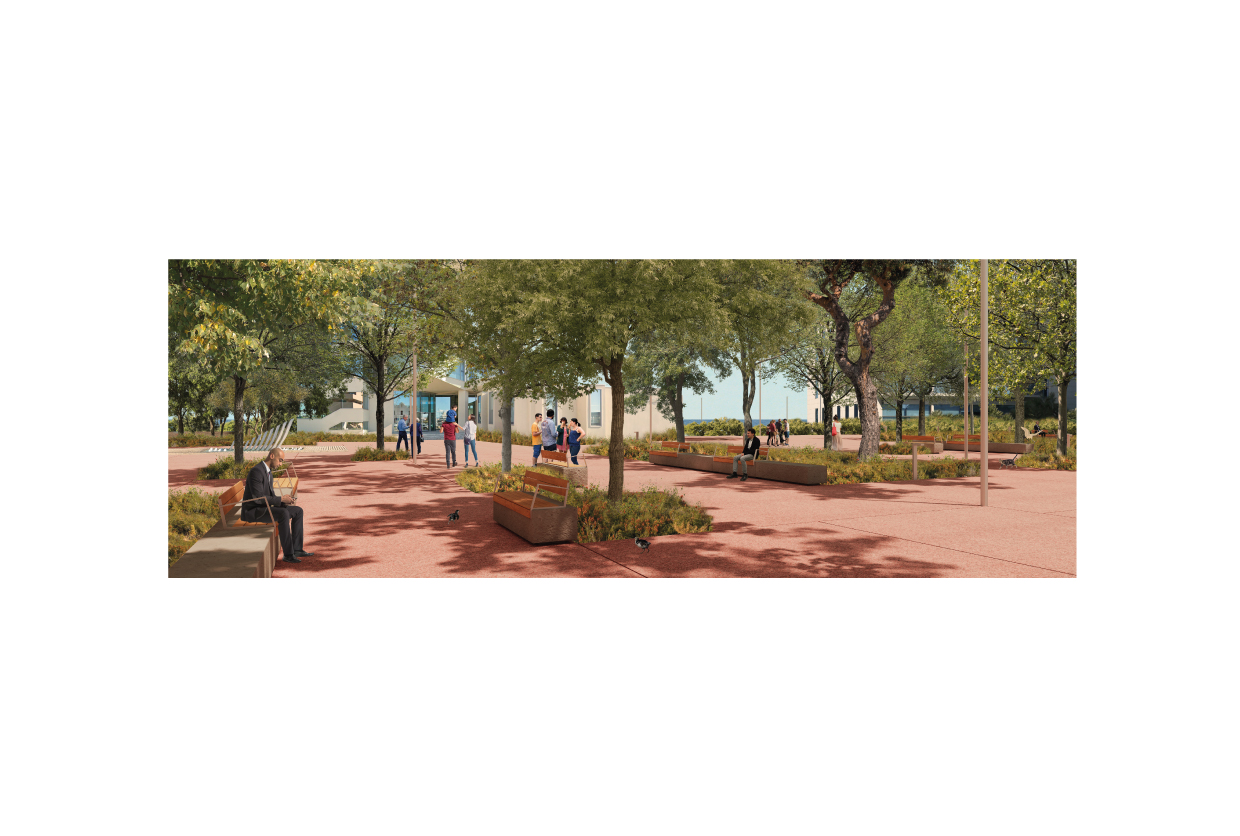
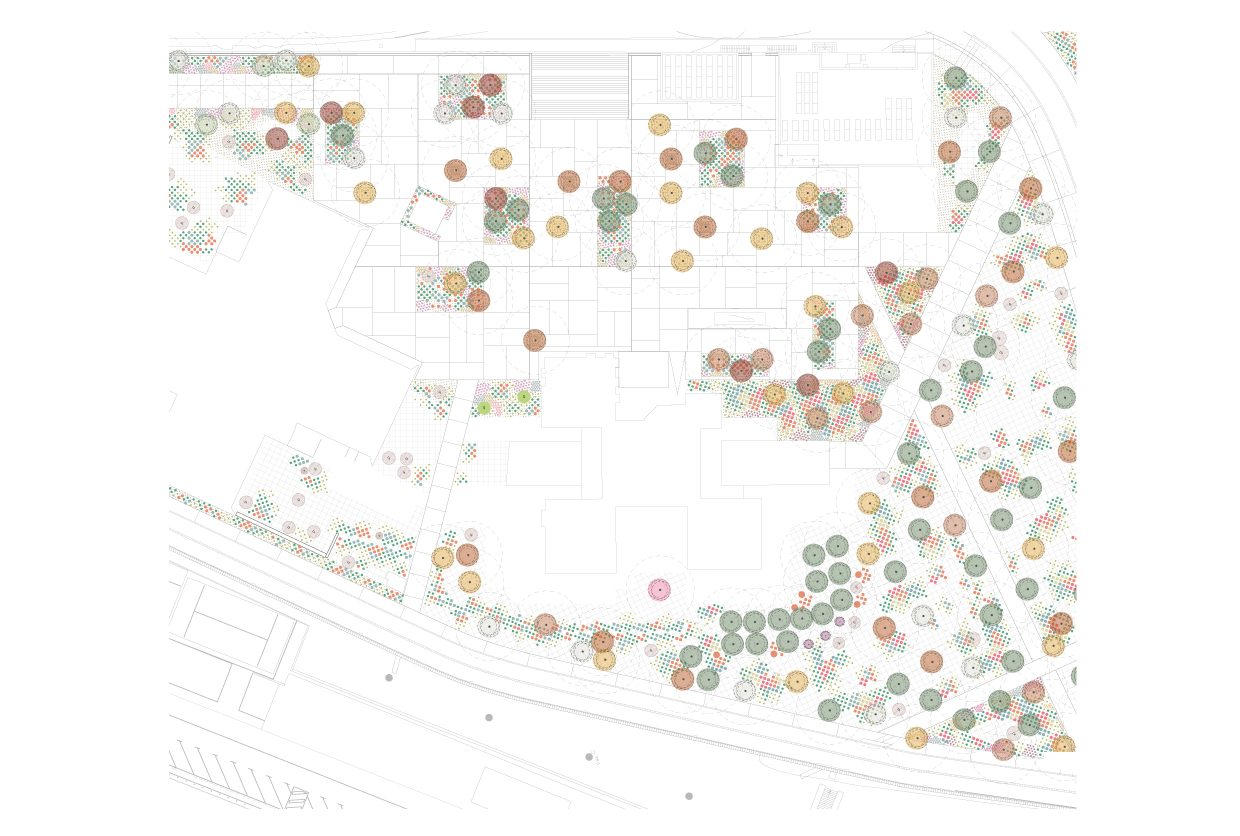
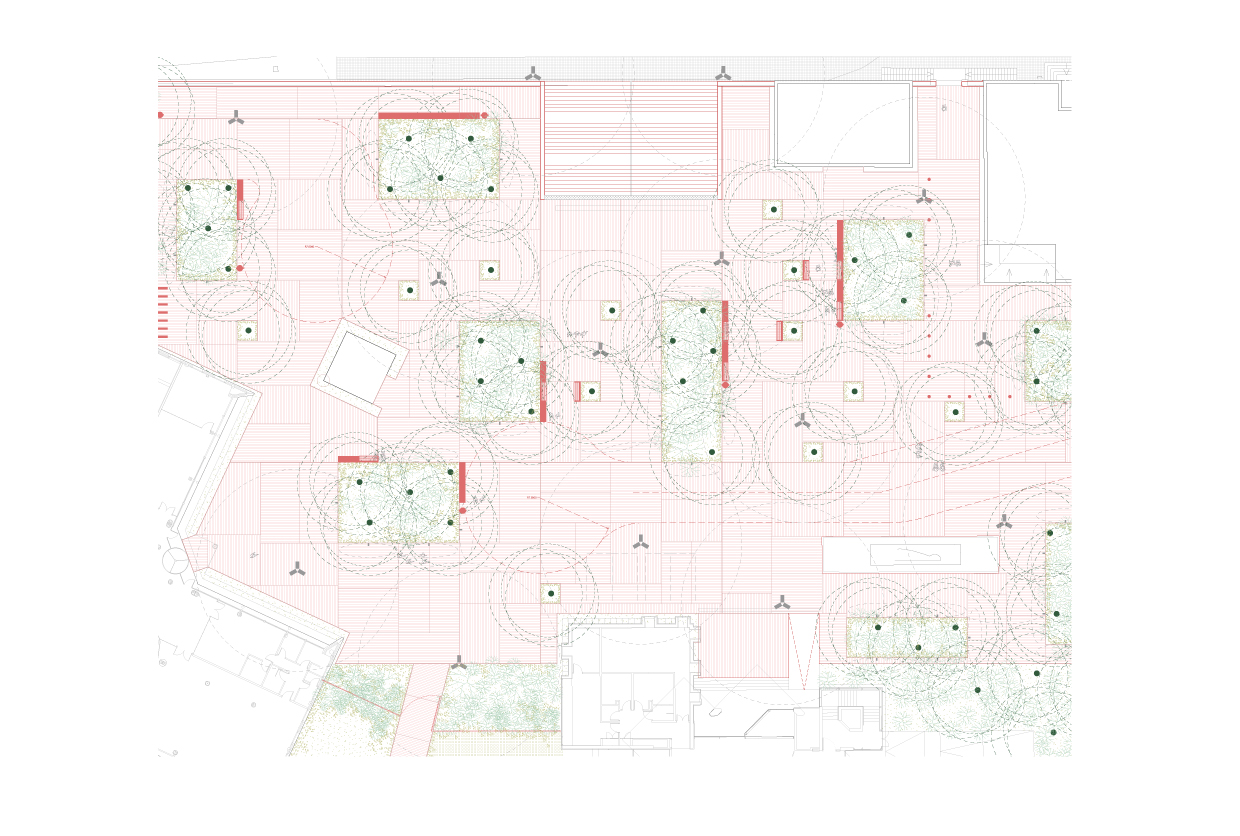
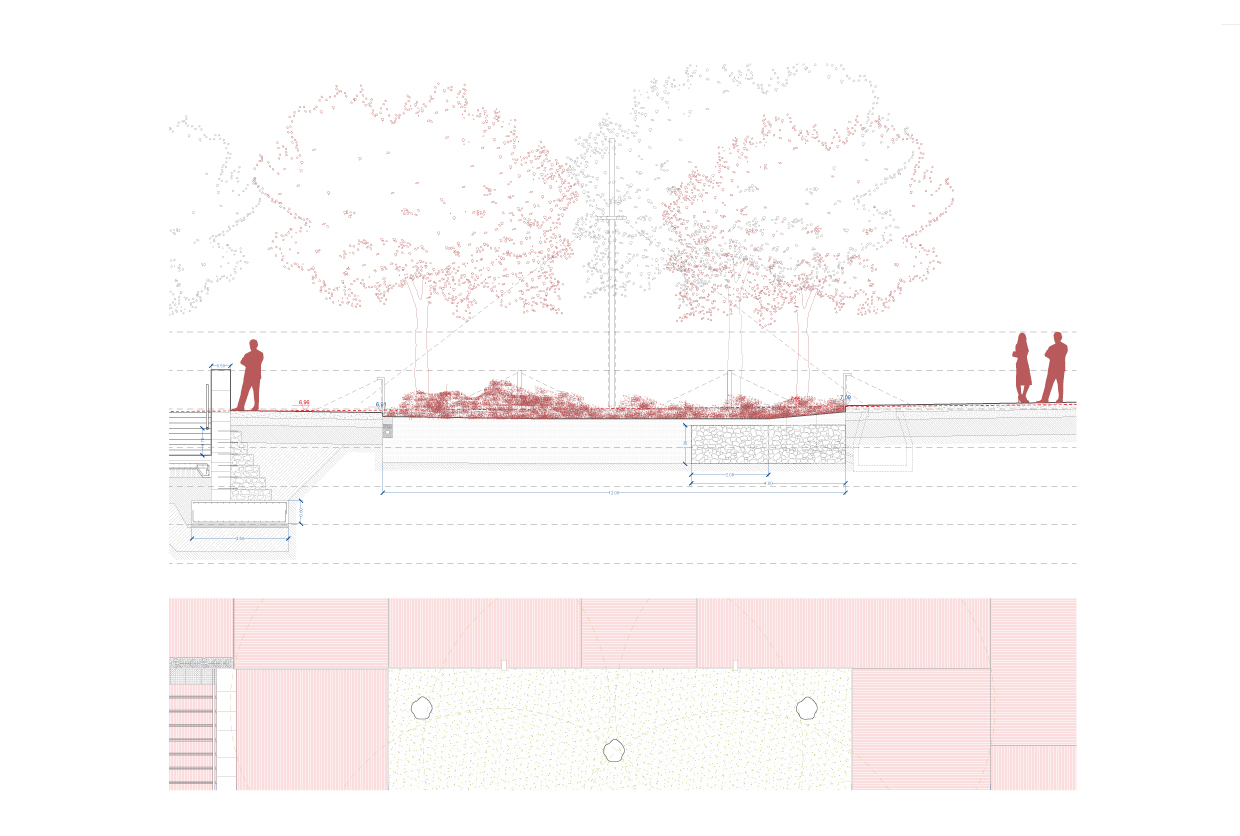
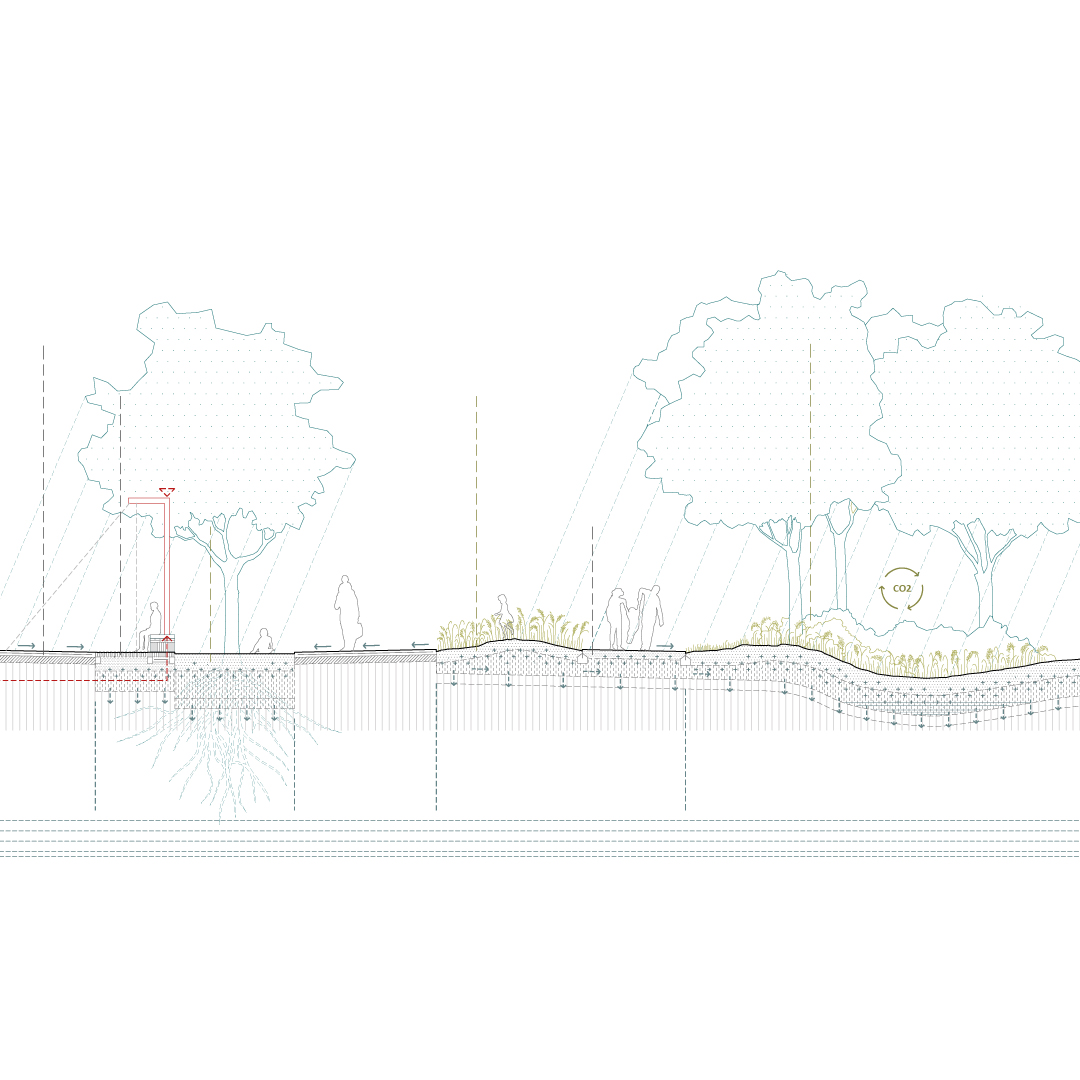
APT Square is a large carpet that extends to the façades of the buildings. It features large landscaped and tree-filled flowerbeds that serve as water infiltration points. A micro-deactivated concrete pavement is proposed. In the park area, the maximum number of trees possible is concentrated, forming a forest. Regarding the drainage system, micro-topographies with cavities for water lamination are created. Paseo del Reloj consists of a central band paved with deactivated concrete with flowerbeds on both sides. The Red Cross Square resolves the meeting point at the end of Paseo del Reloj with the Vial del Mar through a central triangular flowerbed, serving as a resting point and a space for sustainable drainage, taking advantage of the large, vegetated area it offers.